
How Much Should an Auto Repair Shop Charge Per Hour?
One of the biggest pricing decisions for any repair shop or mobile mechanic is the hourly labor rate. Charge too little and you may stay busy but struggle to make a profit. Charge too much without explaining your value and customers may compare only the number instead of the quality of work.
This guide explains how auto repair labor rates work, what expenses to consider, and how to calculate a shop rate that covers overhead, pays the technician, and leaves room for profit.
What Is an Auto Repair Shop Labor Rate?
An auto repair labor rate is the amount a shop charges per hour for technician labor. This rate is used to price diagnostics, repairs, maintenance, and other services.
For example, if a repair takes 2 hours and the shop labor rate is $120 per hour, the labor portion of the job would be $240 before parts, taxes, fees, or supplies.
Why Your Labor Rate Matters
Your labor rate needs to cover more than the mechanic’s time. It also helps pay for business expenses such as tools, insurance, rent, software, utilities, taxes, marketing, training, and administrative time.
A common mistake is setting your labor rate based only on what you want to earn per hour. That does not work because your business has expenses beyond your paycheck.
Common Expenses That Affect Shop Labor Rates
- Technician wages
- Payroll taxes
- Shop rent or mortgage
- Insurance
- Tools and equipment
- Diagnostic subscriptions
- Shop software
- Utilities
- Marketing
- Training
- Office supplies
- Vehicle expenses for mobile mechanics
How to Calculate Your Auto Repair Labor Rate
A simple way to estimate your labor rate is to add up your monthly business costs, add your desired profit, and divide that number by your billable hours.
Basic Formula
Required labor rate = Monthly expenses + desired profit ÷ monthly billable hours
This formula is not perfect, but it gives you a clear starting point.
Example Shop Rate Calculation
| Monthly Expense | Estimated Cost |
|---|---|
| Rent | $2,500 |
| Insurance | $600 |
| Utilities | $500 |
| Software and subscriptions | $300 |
| Tools and equipment | $800 |
| Marketing | $500 |
| Admin and office costs | $300 |
| Total Monthly Overhead | $5,500 |
If the shop wants $10,000 in monthly gross profit before owner taxes and has 160 billable hours available, the calculation would look like this:
$5,500 overhead + $10,000 desired profit = $15,500
$15,500 ÷ 160 billable hours = $96.88 per hour
In this example, the shop would likely need to charge at least $100 per hour just to meet that basic goal.
Billable Hours vs Working Hours
Not every hour worked is billable. This is where many shops miscalculate.
Technicians and owners spend time on:
- Answering calls
- Ordering parts
- Cleaning the shop
- Writing estimates
- Following up with customers
- Training
- Waiting on approvals
- Administrative work
If you work 40 hours per week, that does not mean you bill 40 hours per week. Your labor rate must account for non-billable time.
What Should Mobile Mechanics Charge Per Hour?
Mobile mechanics often have lower facility costs than a traditional shop, but they also have travel time, fuel, vehicle maintenance, mobile equipment, and scheduling gaps.
Mobile mechanics should consider charging:
- An hourly labor rate
- A diagnostic fee
- A trip charge
- A minimum service fee
- Premium pricing for emergency or after-hours work
Example Mobile Mechanic Pricing
| Service Type | Example Price Range |
|---|---|
| Diagnostic visit | $75-$150 |
| Trip charge | $25-$75 |
| Hourly labor rate | $75-$150+ |
| Minimum service call | $100-$200 |
| After-hours service | Premium rate |
Do Not Race to the Bottom
Being the cheapest shop in town is usually not a strong long-term strategy. Cheap pricing can attract price shoppers, difficult customers, and jobs with little profit.
A better approach is to compete on professionalism, communication, convenience, quality, and clear documentation.
How to Explain Your Labor Rate to Customers
Customers may not always understand why labor costs what it does. Clear communication helps.
You can explain that your rate covers trained labor, diagnostic equipment, insurance, tools, warranty handling, business costs, and the time required to perform the repair correctly.
Labor Rate Mistakes to Avoid
Charging Based Only on Competitors
Competitor pricing matters, but your expenses may be different. Do not copy another shop’s labor rate without knowing your own numbers.
Ignoring Non-Billable Time
Every shop has non-billable time. If your rate does not account for it, your profit will suffer.
Not Charging for Diagnostics
Diagnostics require skill, tools, and time. Giving away diagnostic work can hurt profitability.
Forgetting About Taxes
Set aside money for taxes. Revenue is not the same as take-home pay.
Track Your Numbers
Your labor rate should not be a random guess. Track your estimates, invoices, payments, customer history, and job profitability so you can make better pricing decisions.
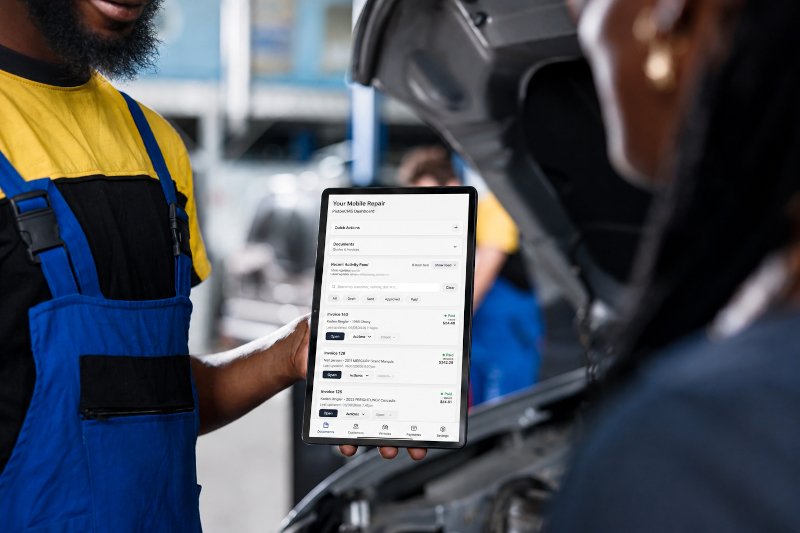
PistonCMS helps repair shops and mobile mechanics manage estimates, invoices, customer records, vehicle history, and payment tracking from one dashboard.
Frequently Asked Questions
What is a good hourly rate for an auto repair shop?
A good hourly rate depends on your market, expenses, technician skill, overhead, and profit goals. The right number is the rate that covers your costs and leaves room for profit.
Should mobile mechanics charge a trip fee?
Yes. Travel time, fuel, and vehicle expenses are real costs. A trip fee or minimum service charge helps protect your time.
Should diagnostics be free?
In most cases, no. Diagnostics require time, skill, and equipment. Charging for diagnostics helps protect your business from unpaid labor.
How often should a shop review its labor rate?
At least once or twice per year. Review your expenses, workload, profit, and local market conditions.
Stay Updated
Get updates and repair resources.
Continue Learning
Related diagnostic and repair information: